Sunday, March 31, 2019

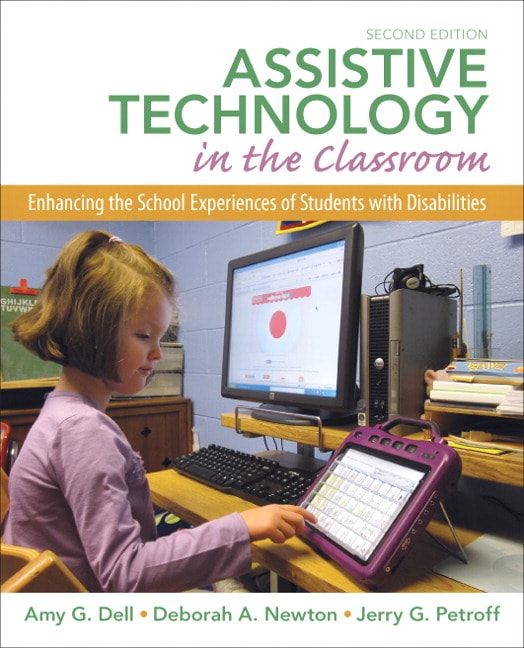
Assistive Technology in the Classroom: Enhancing the School Experiences of Students with Disabilities, 2nd Edition

Assistive Technology in the Classroom: Enhancing the School Experiences of Students with Disabilities, 2nd Edition

45.00$

Test Banks & Solution Manual

  1. Test Banks for Textbooks. Save money on TEST BANKS
  2. Anticipate the type of the questions that will appear in your exam.
  3. Delivery is INSTANT. You can download the files IMMEDIATELY once payment is done.
  4. Our test banks can help! All test banks are Downloads-take them with you to study!
  5. YOU GET ALL OF THE CHAPTERS. Each Test Bank follows your textbook.
  6. Ace Your Exams with Us! We are Students Helping Students Pass.
  7. Customer Service 24/7

Assistive Technology in the Classroom: Enhancing the School Experiences of Students with Disabilities, 2nd Edition Bank Test , Assistive Technology in the Classroom: Enhancing the School Experiences of Students with Disabilities, 2nd Edition Textbook , Assistive Technology in the Classroom: Enhancing the School Experiences of Students with Disabilities, 2nd Edition PDF , Assistive Technology in the Classroom: Enhancing the School Experiences of Students with Disabilities, 2nd Edition eBook , Amy G. Dell Deborah A. Newton Jerry G. Petroff

Category : Higher Education

Table of Contents

PART I:  Benefits of Computer Use in Special Education

Chapter 1:  Introduction to Assistive Technology

            Focus Questions

Introduction

What Is Assistive Technology?

The Legal Basis for Assistive Technology

            Individuals with Disabilities Education Improvement Act of 2004

            Section 504 of the Rehabilitation Act of 1973

            Americans with Disabilities Act (ADA)

Brief History of Assistive Technology

Assistive Technology Decision-Making Process

Universal Design

Universal Design for Learning

A Note on Language

Conclusion

Chapter 2:  Assistive Technology to Support Writing

            Focus Questions

The Context–Process Writing

Problems Students with Disabilities Have with Writing

Technology Tools That Support the Writing Process

            Pre-Writing:  Graphic Organizers

            Drafting

            Editing

            Reviewing

            Sharing or Publishing

Technology Tools that Support Notetaking

            Portable Word Processors

            Portable Braille Notetakers

            Notetaking Services for Deaf/Hard of Hearing Students

            Capturing Devices

Technology Alone Will Not Improve Students’ Writing

            Instruction on Technology Tools for Writing

            Putting It All Together

Chapter 3:  Assistive Technology to Support Reading

Focus Questions

Introduction

What We Know About Teaching Children to Read:  Evidenced-Based Strategies

            Findings of the National Reading Panel:  Topic Areas

Reading Problems in Students with Disabilities

How Technology Can Address These Problems

            Learning to Read:  Computer as a Remediation Tool

            Reading to Learn:  Computer as a Compensation Tool

            Technology Tools to Access Alternate Formats

Decision-Making:  Instructional Tool or Compensatory Tool?


Chapter 4: Technology to Support Universal Design for Learning (UDL)

and Differentiated Instruction

Focus Questions

Introduction

UDL Principle 1: Multiple Means of Representation

            Provide Multiple Means of Representation

            What Multiple Means of Representation Looks Like in a Classroom

UDL Principle 2: Multiple Means of Action and Expression

            Provide Multiple Means of Action and Expression

            What Multiple Means of Action and Expression Look Like in the Classroom

UDL Principle 3: Multiple Means of Engagement

            Provide Multiple Means of Engagement

            What Multiple Means of Engagement Looks Like in a Classroom

Web Accessibility

Chapter 5: Computers and the Internet for Teaching Math

Focus Questions

Introduction

Addressing the Needs of Students with Disabilities

Features of Technology-Based Learning Activities

Selecting Activities: Focus on Math

            Automaticity and Fluency

            Visual-Spatial or Motor Control Difficulties

            Math Concepts, Skills, and Problem Solving

            Software for Math Skills, Concepts and Problem Solving

            Authoring Software

Chapter 6: Assistive Technology to Enhance Communication

Focus Questions

Introduction

The Importance of Communication–Part 1

            Problems Students Who Are Deaf or Hard of Hearing Have with Communication

            Problems Resulting from Communication Problems

Technology Tools That Address Communication Problems for Students Who Are Deaf/Hard of Hearing

            Hearing Lectures with Assistive Listening Devices

            Types of Assistive Listening Devices

            Interacting with Teachers and Peers Outside Class

The Importance of Communication–Part 2     

            Problems Students with Physical Disabilities or Autism Have with Communication

            Problems Resulting from Communication Problems

Technology Tools That Address Communication Problems for Students Who Cannot Speak: Augmentative Communication


PART II:  Access to Computers

Chapter 7:  Providing Access to Computers:  Using What You Have

Focus Questions

Introduction

Universal Design

            Flexibility in Use

Accessibility Features for Users with Disabilities

            Keyboard Modifications and Mouse Control

            Modifications for Students with Sensory Impairments

Chapter 8: Assistive Technology for Computer Access

Focus Questions

Introduction

Low-Tech Adaptations for Computer Use

            Keyboard Labels

            Selecting/Pointing Devices

            Keyguards

            Moisture Guards

Alternate Input Devices

            Mouse Alternative

            Keyboard Shortcuts

            Trackballs

            Joysticks

            Touch Screens

            Head Pointing Systems

            Eye Gaze Systems

Alternate Input: Alternative Keyboards

            Expanded Keyboards

            Mini-Keyboards

            One-Handed Keyboards

            On-Screen Keyboards

            Customizable Keyboards

            Single Switches for Scanning and Morse Code

            Speech Recognition.

Alternate Output Options

            Screen Magnification

            Screen Readers

            Refreshable Braille

            Braille Embossers

Chapter 9:  Issues in Selection of Access Method(s)

Focus Questions

Introduction

Consideration of Assistive Technology During IEP Development

Hallmarks of Exemplary Assistive Technology Decision-Making and Assessment

            Use of a Team Approach in Assistive Technology Assessment

            Focus on Student Needs and Abilities

            Examination of Tasks to Be Completed

            Consideration of Relevant Environmental Issues.

            Trial Use of Assistive Technology

            Providing Necessary Supports

            Viewing Assessment as an Ongoing Process

Resources to Guide Assistive Technology Consideration and Assessment

            Quality Indicators for Assessment of Assistive Technology Needs

            Education Tech Points for Assistive Technology Planning

            SETT Framework

Summary

Suggested Activities


PART III:  Augmentative Communication

Chapter 10:  Selecting and Designing a Student’s Augmentative Communication System

Focus Questions

Introduction

Considerations in System Selection and Design

            Myths and Realities

            Who Should Assess?  Collaborative Team Assessment Approach

            How Should the Team Assess?  Features of the Collaborative Assessment Process

            Features of the Process of Selecting AAC Systems

            What Components Must Be Identified?  Symbols, Vocabulary and Access Method

Evaluating the Efficiency and Effectiveness of a Student’s Augmentative Communication System

Conclusion

Chapter 11:  AT Approaches to Teaching Early Communication and Literacy

Focus Questions

Introduction

What Is Communication?

How Do Communication and Language Develop?

            What Factors Promote Communication and Language Development?

Problems Students with Disabilities Have with Early Communication Development

Technology Tools That Support Early Communication Development

            Types of Switches to Promote Early Communication

            Determining the Use of Switches for Early Communication

            Examples of Switch Technology for Early Communication in the Classroom

Emergent-Conventional Literacy

Chapter 12: Integrating Augmentative Communication in the Classroom, Home, and Community

Focus Questions

Introduction

Supportive Environments for Augmentative Communication Users: The Teacher’s Role

            Curriculum Issues

            Ongoing Skill Development in Communication

            Importance of Selecting Appropriate Vocabulary

            Use of Peers as Communication Facilitators

            Other Strategies

            Need for Teacher Training

            Not Everything Is High-Tech

Infusing Communication Development Within the IEP

Transition from School to School and Teacher to Teacher

Home and Community Use

            Using Augmentative Communication in the Community


PART IV:  Making It Happen

Chapter 13: Implementation of Assistive Technology in Schools

Focus Questions

Introduction

Legal Basis for Assistive Technology

Integrating Assistive Technology into the IEP

            Specially Designed Instruction

            Supplementary Aids and Services, and Related Services

Critical Issues in Assistive Technology Implementation

            The Digital Divide

            Culture

            Assistive Technology Consideration Misunderstood

            Educational Professionals’ Lack of Knowledge and Skills

            Information Technology Policies

            Funding

            Implementing Assistive Technology Recommendations


Chapter 14: Implementation of Assistive Technology in Transition Planning

Focus Questions

Preparation for Transition from High School to College

            Problems Students with Disabilities Face in College

            Typical Accommodations at College That Meet These Needs

            There Are No IEPs in College

            Reasonable Accommodations

            Procedures for Obtaining Assistive Technology in College

            Legal and Procedural Differences Between ADA and IDEA

Importance of Transition Planning in High School

            Assistive Technology Skills

            Self-Advocacy skills

Assistive Technology for Transition from High School to Home, Workplace, and Community

Technology to Teach Functional Skills

            Instructional Software to Teach Functional Skills

            Authoring Computer-Based Activities to Teach Functional Skills

            Technology to Provide Visual Supports

            Computer-Generated and Video-Based Social Stories

            Simple Technology for Self-Care and Leisure Activities

Planning for Transition to Home, Workplace, and Community

Index

Instalant Download Assistive Technology in the Classroom: Enhancing the School Experiences of Students with Disabilities, 2nd Edition by Amy G. Dell Deborah A. Newton Jerry G. Petroff ZIP OR PDF

What is Test Bank?

The test bank is a guide for testing and exams. It contains a lot of questions with their correct answers related to an academic textbook. Test banks usually contain true/false questions, multiple choice questions, and essay questions. Authors provide those guides to help instructors and teachers create their exams and tests easily and fast. We recommend all students to download the sample attached to each test bank page and review them deeply..

What is Solutions Manual?

The solutions manual is a guide where you can find all the correct answers (odd and even) to your textbooks’ questions, cases, and problems.

Can I get a sample before buying a Test Bank or Solutions Manual?

Samples are attached to each test bank and solutions manual page at our website. We always recommend students and instructors to download the samples before placing orders. At MANUALS1 we offer a complete sample chapter for each product.

Can I download my files immediately after completing the order?

Yes. Our system will grant you an access to download your files immediately after completing the order.

How will I download my product?

You will receive an email from testbanky that contains the download link.

I am not able to download my test bank or solution manual

If you could not download your product for any reason, contact us and we will solve the issue immediately.

Economics of Money, Banking, and Financial Markets, The, 10th Edition

Economics of Money, Banking, and Financial Markets, The, 10th Edition

45.00$

Test Banks & Solution Manual

  1. Test Banks for Textbooks. Save money on TEST BANKS
  2. Anticipate the type of the questions that will appear in your exam.
  3. Delivery is INSTANT. You can download the files IMMEDIATELY once payment is done.
  4. Our test banks can help! All test banks are Downloads-take them with you to study!
  5. YOU GET ALL OF THE CHAPTERS. Each Test Bank follows your textbook.
  6. Ace Your Exams with Us! We are Students Helping Students Pass.
  7. Customer Service 24/7

Economics of Money, Banking, and Financial Markets, The, 10th Edition Bank Test , Economics of Money, Banking, and Financial Markets, The, 10th Edition Textbook , Economics of Money, Banking, and Financial Markets, The, 10th Edition PDF , Economics of Money, Banking, and Financial Markets, The, 10th Edition eBook , Frederic S. Mishkin, Columbia University

Category : Higher Education

Table of Contents

Part 1: Introduction
Chapter 1: Why Study Money, Banking, and Financial Markets?
Chapter 2: An Overview of the Financial System
Chapter 3: What Is Money?
Part 2: Financial Markets
Chapter 4: Understanding Interest Rates
Chapter 5: The Behavior of Interest Rates
Chapter 6: The Risk and Term Structure of Interest Rates
Chapter 7: The Stock Market, the Theory of Rational Expectations, and the Efficient Market Hypothesis
Part 3: Financial Institutions
Chapter 8: An Economic Analysis of Financial Structure
Chapter 9: Financial Crises
Chapter 10: Banking and the Management of Financial Institutions
Chapter 11: Economic Analysis of Financial Regulation
Chapter 12: Banking Industry: Structure and Competition
Part 4: Central Banking and the Conduct of Monetary Policy
Chapter 13: Central Banks and the Federal Reserve System
Chapter 14: The Money Supply Process
Chapter 15: The Tools of Monetary Policy
Chapter 16: The Conduct of Monetary Policy: Strategy and Tactics
Part 5: International Finance and Monetary Policy
Chapter 17: The Foreign Exchange Market
Chapter 18: The International Financial System
Part 6: Monetary Theory
Chapter 19: Quantity Theory, Inflation, and the Demand for Money
Chapter 20: The IS Curve
Chapter 21: The Monetary Policy and Aggregate Demand Curves
Chapter 22: Aggregate Demand and Supply Analysis
Chapter 23: Monetary Policy Theory
Chapter 24: The Role of Expectations in Monetary Policy
Chapter 25: Transmission Mechanisms of Monetary Policy

Instalant Download Economics of Money, Banking, and Financial Markets, The, 10th Edition by Frederic S. Mishkin, Columbia University ZIP OR PDF

What is Test Bank?

The test bank is a guide for testing and exams. It contains a lot of questions with their correct answers related to an academic textbook. Test banks usually contain true/false questions, multiple choice questions, and essay questions. Authors provide those guides to help instructors and teachers create their exams and tests easily and fast. We recommend all students to download the sample attached to each test bank page and review them deeply..

What is Solutions Manual?

The solutions manual is a guide where you can find all the correct answers (odd and even) to your textbooks’ questions, cases, and problems.

Can I get a sample before buying a Test Bank or Solutions Manual?

Samples are attached to each test bank and solutions manual page at our website. We always recommend students and instructors to download the samples before placing orders. At MANUALS1 we offer a complete sample chapter for each product.

Can I download my files immediately after completing the order?

Yes. Our system will grant you an access to download your files immediately after completing the order.

How will I download my product?

You will receive an email from testbanky that contains the download link.

I am not able to download my test bank or solution manual

If you could not download your product for any reason, contact us and we will solve the issue immediately.

Reading, Writing, and Learning in ESL: A Resource Book for Teaching K-12 English Learners, 6th Edition

Reading, Writing, and Learning in ESL: A Resource Book for Teaching K-12 English Learners, 6th Edition

45.00$

Test Banks & Solution Manual

  1. Test Banks for Textbooks. Save money on TEST BANKS
  2. Anticipate the type of the questions that will appear in your exam.
  3. Delivery is INSTANT. You can download the files IMMEDIATELY once payment is done.
  4. Our test banks can help! All test banks are Downloads-take them with you to study!
  5. YOU GET ALL OF THE CHAPTERS. Each Test Bank follows your textbook.
  6. Ace Your Exams with Us! We are Students Helping Students Pass.
  7. Customer Service 24/7

Reading, Writing, and Learning in ESL: A Resource Book for Teaching K-12 English Learners, 6th Edition Bank Test , Reading, Writing, and Learning in ESL: A Resource Book for Teaching K-12 English Learners, 6th Edition Textbook , Reading, Writing, and Learning in ESL: A Resource Book for Teaching K-12 English Learners, 6th Edition PDF , Reading, Writing, and Learning in ESL: A Resource Book for Teaching K-12 English Learners, 6th Edition eBook , Suzanne F. Peregoy, San Francisco State University Owen F. Boyle, San Jose State University

Category : Higher Education

Table of Contents

Brief Table of Contents

1.   English Learners in 21st Century Classrooms

2.   Language and Language Acquisition

3.   Classroom Practices for Effective English Learner Instruction

4.   Oral Language Development in Second Language Acquisition

5.   Emergent Literacy: English Learners Beginning to Write and Read

6.   Words and Meaning: English Learners’ Vocabulary Development

7.   English Learners and Process Writing

8.   Reading and Literature Instruction for English Learners

9.   Content Reading and Writing: Pre-reading and During Reading

10. Content Reading and Writing: Post-reading Strategies for Organizing and Remembering

11. Reading Assessment and Instruction

Instalant Download Reading, Writing, and Learning in ESL: A Resource Book for Teaching K-12 English Learners, 6th Edition by Suzanne F. Peregoy, San Francisco State University Owen F. Boyle, San Jose State University ZIP OR PDF

What is Test Bank?

The test bank is a guide for testing and exams. It contains a lot of questions with their correct answers related to an academic textbook. Test banks usually contain true/false questions, multiple choice questions, and essay questions. Authors provide those guides to help instructors and teachers create their exams and tests easily and fast. We recommend all students to download the sample attached to each test bank page and review them deeply..

What is Solutions Manual?

The solutions manual is a guide where you can find all the correct answers (odd and even) to your textbooks’ questions, cases, and problems.

Can I get a sample before buying a Test Bank or Solutions Manual?

Samples are attached to each test bank and solutions manual page at our website. We always recommend students and instructors to download the samples before placing orders. At MANUALS1 we offer a complete sample chapter for each product.

Can I download my files immediately after completing the order?

Yes. Our system will grant you an access to download your files immediately after completing the order.

How will I download my product?

You will receive an email from testbanky that contains the download link.

I am not able to download my test bank or solution manual

If you could not download your product for any reason, contact us and we will solve the issue immediately.

Revel for Literature for Composition: Reading and Writing Arguments About Essays, Stories, Poems, and Plays , 11th Edition

Revel for Literature for Composition: Reading and Writing Arguments About Essays, Stories, Poems, and Plays , 11th Edition

45.00$

Test Banks & Solution Manual

  1. Test Banks for Textbooks. Save money on TEST BANKS
  2. Anticipate the type of the questions that will appear in your exam.
  3. Delivery is INSTANT. You can download the files IMMEDIATELY once payment is done.
  4. Our test banks can help! All test banks are Downloads-take them with you to study!
  5. YOU GET ALL OF THE CHAPTERS. Each Test Bank follows your textbook.
  6. Ace Your Exams with Us! We are Students Helping Students Pass.
  7. Customer Service 24/7

Revel for Literature for Composition: Reading and Writing Arguments About Essays, Stories, Poems, and Plays , 11th Edition Bank Test , Revel for Literature for Composition: Reading and Writing Arguments About Essays, Stories, Poems, and Plays , 11th Edition Textbook , Revel for Literature for Composition: Reading and Writing Arguments About Essays, Stories, Poems, and Plays , 11th Edition PDF , Revel for Literature for Composition: Reading and Writing Arguments About Essays, Stories, Poems, and Plays , 11th Edition eBook , Sylvan Barnet, Tufts University William Burto, University of Massachusetts - Lowell William E. Cain, Wellesley College

Category : Higher Education

Table of Contents

NOTE: Brief and Comprehensive Tables of Contents follow.

BRIEF CONTENTS   


I. THINKING CRITICALLY ABOUT LITERATURE
1. How to Write an Effective Essay about Literature: A Crash Course
2. What is Critical Thinking about Literature? A Crash Course
3. The Writer as Reader
4. The Reader as Writer
5. The Pleasures of Reading, Writing and Thinking about Literature

II. WRITING ARGUMENTS ABOUT LITERATURE
6. Close Reading: Paraphrase, Summary, and Explication
7. Analysis: Inquiry, Interpretation and Argument
8. Pushing Analysis Further: Re-Interpreting and Revision
9. Comparison and Synthesis
10. Research: Writing with Sources

III. ANALYZING LITERARY FORMS AND ELEMENTS
11. Reading and Writing about Essays
12. Reading and Writing about Stories
13. Reading and Writing about Graphic Fiction
14. Reading and Writing about Plays
15. Reading and Writing about Poems

IV. ENJOYING LITERARY THEMES: A THEMATIC ANTHOLOGY
16. The World Around Us
17. Technology and Human Identity
18. Love and Hate, Men and Women
19. Innocence and Experience
20. All in a Day’s Work
21. American Dreams and Nightmares
22. Law and Disorder
23. Journeys

Appendix A: Writing About Literature: An Overview of Critical Strategies
Appendix B: Remarks about Manuscript Form
Literary Credits
Photo Credits
Index of Authors, Titles, and First Lines
Index of Terms


COMPREHENSIVE CONTENTS

Contents by Genre

Preface to Instructors


 I: THINKING CRITICALLY ABOUT LITERATURE 

 1: How to Write an Effective Essay about Literature: A Crash Course      

The Basic Strategy  

Reading Closely: Approaching a First Draft

     Checklist: Generating Ideas for a Draft 

Writing and Revising: Achieving a Readable Draft

Checklist: Writing and Revising a Draft

Revising: Working with Peer Review

Preparing the Final Draft


 2: What is Critical Thinking about Literature?: A Crash Course 

The Basic Strategy 

What Is Critical Thinking? 

How Do We Engage in Critical Thinking?

Close Reading  

     Checklist: Close Reading 

Analysis:  Inquiry, Interpretation, Argument 

     Checklist:     Inquiry and Question-Asking 

     Checklist:  Interpretation 

     Checklist:  Argument 

Comparison and Synthesis 

     Checklist:  Comparison and Synthesis 

Revision and Self-Awareness 

Standing Back: Kinds of Writing 

Non-Analytic vs. Analytic Writing 


 3: The Writer as Reader                

Reading and Responding  

KATE CHOPIN • Ripe Figs  

Reading as Re-creation  

Reading for Understanding: Collecting Evidence and Making Reasonable Inferences  

Reading with Pen in Hand: Close Reading and Annotation 

 Sample Student Work: Annotation 

     Reading for Response: Recording First Reactions  

Sample Student Work: Response Writing 

     Reading for Inquiry: Ask Questions and Brainstorm Ideas 

Sample Student Work: Inquiry Notes 

     Reading in Context: Identifying Your Audience and Purpose 

From Reading to Writing: Developing an Analytical Essay with an Argumentative Thesis 

Sample Student Analytical Essay: “Images of Ripening in Kate Chopin’s ‘Ripe Figs’”  

The Analytical Essay: Argument and Structure Analyzed  

The Writing Process: From First Responses to Final Essay 

Other Possibilities for Writing  

From Reading to Writing: Moving from Brainstorming to an Analytical Essay 

BRUCE HOLLAND ROGERS • Three Soldiers   

The Writing Process: From Response Writing to Final Essay   

Sample Student Work: Response Writing 

Sample Student Analytical Essay: “Thinking about Three Soldiers Thinking”  

The Analytical Essay: The Development of Ideas Analyzed  

From Reading to Writing: Moving from a Preliminary Outline to an Analytical Essay 

RAY BRADBURY • August 2026: There Will Come Soft Rains  

The Writing Process: From Outlining to Final Essay  

Sample Student Work: Outlining

Sample Student Analytical Essay: “The Lesson of ‘August 2026’”  


Your Turn:  Additional Stories for Analysis  

MICHELE SERROS • Senior Picture Day  

HARUKI MURAKAMI • On Seeing the 100% Perfect Girl One Beautiful April Morning 

JOHN UPDIKE  •  A & P 


 4: The Reader as Writer                

Developing Ideas through Close Reading and Inquiry 

     Getting Ideas   

Annotating a Text   

KATE CHOPIN • The Story of an Hour  

Brainstorming Ideas  

Focused Freewriting 

Sample Student Work: Freewriting 

Listing  

Sample Student Work: Listing 

Asking Questions  

Sample Student Work: Inquiry Notes 

Keeping a Journal  

      Sample Student Work: Journal-writing 

Developing a Thesis through Critical Thinking

Arguing with Yourself 

Arguing a Thesis  

Checklist: Thesis Sentence  

From Reading to Writing to Revising: Drafting an Argument in an Analytical Essay

Sample Preliminary Draft of Student’s Analytical Essay: “Ironies in an Hour”

Revising an Argument  

Outlining an Argument  

Soliciting Peer Review, Thinking about Counterarguments  

From Reading to Writing to Revising: Finalizing an Analytical Essay 

Sample Final Draft of a Student’s Analytical Essay: “Ironies of Life in Kate Chopin’s ‘The Story of an Hour’”  

The Analytical Essay: The Final Draft Analyzed 

From Reading to Writing to Revising: Finalizing an Analytical Essay 

KATE CHOPIN • Désirée’s Baby  

Sample Student Analytical Essay: “Race and Identity in ‘Désirée’s Baby’”  

From Reading to Writing to Revising: Drafting a Comparison Essay 

KATE CHOPIN • The Storm  

Sample Student Work: Comparison Notes 

Sample Student Comparison Essay: “Two New Women”  

The Comparison Essay: Organization Analyzed   

Your Turn: Additional Stories for Analysis  

DAGOBERTO GILB Love in L.A. 

ELIZABETH TALLENT No One’s a Mystery  

JUNOT DIAZ    How to Date a Browngirl, Blackgirl, Whitegirl, or Halfie 

T. CORAGHESSAN BOYLE • Greasy Lake   

MARY ANNE HOOD   How Far She Went 


 5:  The Pleasures of Reading, Writing and Thinking about    Literature    

The Pleasures of Literature 

ALLEN WOODMAN Wallet  

The Pleasures of Analyzing the Texts that Surround Us    

The Pleasures of Authoring Texts   

The Pleasures of Interacting with Texts   

Interacting with Fiction: Literature as Connection   

JAMAICA KINCAID • Girl  

Sample Student Personal Response Essay: “The Narrator in Jamaica Kincaid’s ‘Girl’: Questioning the Power of Voice” 

Interacting with Graphic Fiction: Literature as (Making and Breaking) Rules 

      LYNDA BARRY • Before You Write  

Interacting with Poetry: Literature as Language 

JULIA BIRD • 14: a txt msg pom.  

Interacting with Drama: Literature as Performance

       OSCAR WILDE• excerpt from The Importance of Being Ernest  

Interacting with Essays: Literature as Discovery 

ANNA LISA RAYA • It’s Hard Enough Being Me  


Your Turn:  Additional Stories, Poems, Plays and Essays for Pleasurable Analysis  

Poems

ALBERTO RIOS  •  Nani 

JIMMY SANTIAGO BACA  •  Green Chili 

HELEN CHASIN  •  The Word Plum 

WILLIAM CARLOS WILLIAMS • This Is Just to Say 

GARY SOTO •  Oranges 

SARAH N. CLEGHORN • The Golf Links  

STEVIE SMITH  •  Not Waving but Drowning 

Stories

MARGARET ATWOOD •  Happy Endings 

AMBROSE BIERCE • An Occurrence at Owl Creek Bridge   

Play

MICHAEL GOLAMCO  • The Heartbreaker 

Essay

GEORGE SAUNDERS Commencement Speech on Kindness  


 II: WRITING ARGUMENTS ABOUT LITERATURE

 6  Close Reading: Paraphrase, Summary, and

                           Explication      


What Is Literature?  

Literature and Form  

Form and Meaning  

ROBERT FROST • The Span of Life  

Close Reading: Reading in Slow Motion  

Exploring a Poem and Its Meaning

      LANGSTON HUGHES • Harlem  

Paraphrase

   Sample Student Work: Paraphrase 

Summary 

   Sample Student Work: Summary 

Explication  

Working Toward an Explication

Sample Student Work: Annotation

Sample Student Work: Journal Entries

Sample Student Work: Listing

Sample Student Explication Essay: “Langston Hughes’s ‘Harlem’”  

Explication as Argument  

CATHY SONG • Stamp Collecting

Sample Student Argumentative Explication Essay: “Giving Stamps Personality in ‘Stamp Collecting’”

Checklist: Drafting an Explication


Your Turn:  Additional Poems for Explication  

WILLIAM SHAKESPEARE  •  Sonnet 73

JOHN DONNE • Holy Sonnet XIV

EMILY BRONTË • Spellbound  

LI-YOUNG LEE • I Ask My Mother to Sing  

RANDALL JARRELL • The Death of the Ball Turret Gunner  


 7 Analysis: Inquiry, Interpretation and Argument       

Analysis  

Understanding Analysis as a Process of Inquiry, Interpretation, Argument

Analyzing a Story from the Hebrew Bible: The Judgment of Solomon  

The Judgment of Solomon  

Developing an Analysis of the Story  

Opening Up Additional Ways to Analyze the Story  

Analyzing a Story from the New Testament: The Parable of the Prodigal Son  

The Parable of the Prodigal Son  

Asking Questions that Trigger an Analysis of the Story 

From Inquiry to Interpretation to Argument: Developing an Analytical Paper  

ERNEST HEMINGWAY • Cat in the Rain

Close Reading

Sample Student Work: Annotations

Inquiry Questions  

  Sample Student Work: Inquiry Notes

Interpretation Brainstorming

Sample Student Work: Journal Writing

     The Argument-Centered Paper

          Sample Student Argument Paper: “Hemingway’s American Wife”

      From Inquiry to an Analytical Paper: A Second Example

       Sample Student Work: Inquiry Notes

    Sample Student Work: Journal Writing

JAMES JOYCE • Araby

    Sample Student Analytical Essay: “‘Araby’s’ Everyday and Imagined Setting”

From Inquiry to Interpretation to Argument: Maintaining an Interpretation in an Analytical Paper

    APHRA BEHN • Song: Love Armed  

   Maintaining Interpretive Interest

Sample Student Work: Inquiry Notes

    Sample Student Work: Journal Writing

    Sample Student Essay: “The Double Nature of Love”   

Checklist: Editing a Draft  


Your Turn:  Additional Short Stories and Poems for Analysis  

EDGAR ALLAN POE • The Cask of Amontillado  

LESLIE MARMON SILKO • The Man to Send Rain Clouds  

BILLY COLLINS  •  Introduction to Poetry

ROBERT FROST • The Road Not Taken  

JOHN KEATS  •  Ode on a Grecian Urn

MARTIN ESPADA  •  Bully


 8  Pushing Analysis Further: Re-Interpreting and

                            Revision   

Interpretation and Meaning  

Is the Author’s Intention a Guide to Meaning?  

What Characterizes a Sound Interpretation?  

Interpreting Pat Mora’s “Immigrants”  

PAT MORA • Immigrants  

Checklist: Writing an Interpretation  

Strategy #1: Pushing Analysis by Rethinking First Responses

JEFFREY WHITMORE • Bedtime Story  

Sample Student Work: Response Writing Revisited

DOUGLAS L. HASKINS • Hide and Seek 

Sample Student Work: Response Writing Revisited

MARK PLANTS • Equal Rites  

Sample Student Work: Response Writing Revisited

Strategy #2: Pushing Analysis by Exploring Literary Form

LANGSTON HUGHES • Mother to Son

   Sample Student Work: Annotation Exploring Form

   Sample Student Work: Inquiry Notes Exploring Form

  Sample Student Analytical Essay: “Accepting the Challenge of a Difficult Climb in Langston Hughes’ ‘Mother to Son’”

Strategy #3: Pushing Analysis by Emphasizing Concepts and Insights

     ROBERT FROST • Stopping by Woods on a Snowy Evening  

Sample Student Analytical Essay: “Stopping by Woods–and Going On”  

Analyzing the Analytical Essay’s Development of a Conceptual Interpretation

Sample Student Analytical Essay: “ ‘Stopping by Woods on a Snowy Evening’ as a Short Story”  

Strategy #4: Pushing Analysis Through Revision

          Revising for Ideas vs. Mechanics

          Revising Using Instructor Feedback, Peer Feedback, and Self-Critique

          Examining a Preliminary Draft with Revision in Mind

HA JIN •  Saboteur

            Sample Student Preliminary Draft of an Analytical Essay: “Individual and Social Morals in Ha 

                        Jin’s ‘Saboteur’”

         Developing a Revision Strategy: Thesis, Ideas, Evidence, Organization, Correctness

         Sample Student Final Draft of an Analytical Essay: “Individual and Social Morals in Ha 

                        Jin’s ‘Saboteur’”


Your Turn: Additional Poems and Stories for Interpretation  

T. S. ELIOT • The Love Song of J. Alfred Prufrock  

JOHN KEATS • Ode on a Grecian Urn  

THOMAS HARDY  •  The Man He Killed

ANNE BRADSTREET • Before the Birth of One of Her Children

CHRISTINA ROSSETTI • After Death

FRED CHAPELLE •  Narcissus and Echo

JOYCE CAROL OATES • Where Are You Going, Where Have You Been?  

RAYMOND CARVER • Cathedral  


 9   Comparison and Synthesis  

Comparison and Critical Thinking

Organizing a Comparison Paper

Comparison and Close Reading

Comparison and Asking Questions

Comparison and Analyzing Evidence

     Sample Student Work: Comparison Arguments

Comparison and Arguing with Yourself

E. E. CUMMINGS • Buffalo Bill ’s  

     Checklist: Developing a Comparison

Synthesis Through Close Reading: Analyzing a Revised Short Story

RAYMOND CARVER • Mine  

RAYMOND CARVER • Little Things  

     Sample Student Writing: Innovative Listing

Synthesis Through Building a Concept Bridge: Connecting Two Poems

THYLIAS MOSS • Tornadoes

KWAME DAWES • Tornado Child

Sample Student Writing: Innovative Response Writing

Synthesis Using Theme

SANDRA CISNEROS •  Barbie-Q

MARYANNE O’HARA •Diverging Paths and All That

JAYNE ANNE PHILLIPS •  Sweethearts

Sample Student Writing:  Innovative Mapping

Synthesis Using Form

WILLIAM SHAKESPEARE • Sonnet 18:Shall I Compare Thee to a Summer’s Day?

HOWARD MOSS • Shall I Compare Thee to a Summer’s Day

Sample Student Comparison Essay: “A Comic Re-Writing of a Shakespeare Sonnet”

Checklist: Revising a Comparison


Your Turn:  Additional Poems and Stories for Comparison and Synthesis

Poetry

“Carpe diem” poems

ROBERT HERRICK • To the Virgins, to Make Much of Time  

CHRISTOPHER MARLOWE • The Passionate Shepherd to His Love  

SIR WALTER RALEIGH • The Nymph’s Reply to the Shepherd  

ANDREW MARVELL • To His Coy Mistress  

JOHN DONNE • The Bait  


“blackberry” poems

GALWAY KINELL •Blackberry Eating

SYLVIA PLATH • Blackberrying

SEAMUS HEANEY •Blackeberry-Picking

YUSEF KOMUNYAKAA •Blackberries


“America” poems

WALT WHITMAN • I Hear America Singing

LANGSTON HUGHES •  I, Too [Sing America]


Stories

Stories about reading and writing

JULIO CORTAZAR •  Continuity of Parks

A.M. HOMES • Things You Should Know


Stories about grandmothers

LAN SAMANTHA CHANG •  Water Names

KATHERINE ANNE PORTER • The Jilting of Granny Weatherall  


 10:  Research: Writing with Sources      

Creating a Research Plan

     Enter Research with a Plan of Action

     What Does Your Own Institution Offer?

     Plan the Type of Research You Want to Do

Selecting a Research Topic and Generating Research Questions

     Use Close Reading as Your Starting Point

     Select Your Topic

     Skim Resources Through Preliminary Research

     Narrow Your Topic and Form a Working Thesis

     Sample Student Work: Digital Research Folder Assignment and Research Plan Notes

     Sample Student Work: Digital Research Folder “Working Thesis” Notes

     Generate Key Concepts as Keywords

     Create Inquiry Questions

     Sample Student Work: Digital Research Folder “Research Keywords” and “Inquiry Questions” Notes

Locating Materials Through Productive Searches

Generate Meaningful Keywords

Checklist:  Creating Meaningful Keywords for a Successful Search

Using Academic Databases to Locate Materials

     Search Full-Text Academic Databases

     Search the MLA Database

     Perform Advanced Keyword Searches

Sample Student Work: Searching the Academic Database

Using the Library Catalog to Locate Materials

        Locate Books and Additional Resources

        Sample Student Work: Searching the Library Catalog

Using the Internet to Perform Meaningful Research

       Sample Student Work: Searching the Internet

Evaluating Sources for Academic Quality

       Checklist: Evaluating Web Sites for Quality

     Sample Student Work: Evaluating Sources for Academic Quality

Evaluate Sources for Topic “Fit”

     Checklist: Evaluating Sources for Topic “Fit”

     Sample Student Work: Evaluating Sources for Topic “Fit”

Taking Notes on Secondary Sources

     A Guide to Note-Taking

     Sample Student Work: Annotation of Research Sources

     Sample Student Work: Digital Research Folder Critical Thinking Notes

Drafting the Paper

Focus on Primary Sources

Integrate Secondary Sources  

Create a Relationship Between Your Writing and the Source

Surround the Source with Your Writing

Agree with a Source in Order to Develop Your Ideas

Sample Student Work: Source Integration

Avoiding Plagiarism  

Sample Student Research Essay: “Dickinson’s Representation of Changing Seasons and Changing Emotions”


 III: ANALYZING LITERARY FORMS AND ELEMENTS    

 11: Reading and Writing about Essays   

Types of Essays  

Elements of Essays

The Essayist’s Persona  

Voice  

Tone  

Topic and Thesis  

BRENT STAPLES • Black Men and Public Space

Checklist: Getting Ideas for Writing about Essays  

Student Writing Portfolio (summary paper): Brent Staples “Black Men and

Public Space”

Your Turn: Additional Essays for Analysis  

LANGSTON HUGHES • Salvation  

LAURA VANDERKAM • Hookups Starve the Soul  

STEVEN DOLOFF • The Opposite Sex  

GRETEL EHRLICH • About Men  


 12: Reading and Writing about Stories   

Stories True and False  

GRACE PALEY • Samuel  

Elements of Fiction  

Character  

Plot

Foreshadowing  

Setting and Atmosphere  

Symbolism  

Narrative Point of View  

Style and Point of View  

Theme  

WILLIAM FAULKNER • A Rose for Emily  

Checklist: Getting Ideas for Writing about Stories  

Student Writing Portfolio (analysis paper):  William Faulkner “A Rose for

Emily”  


Your Turn: Additional Stories for Analysis  

KATHERINE MANSFIELD   •  Miss Brill

TIM O’BRIEN • The Things They Carried  

Gabriel García Márquez • A Very Old Man with Enormous Wings: A Tale for Children  

An Author In Depth:  Flannery O’Connor

FLANNERY O’CONNOR • A Good Man Is Hard to Find  

Remarks from Essays and Letters  

From “The Fiction Writer and His Country”  

From “Some Aspects of the Grotesque in Southern Fiction”  

From “The Nature and Aim of Fiction”  

From “Writing Short Stories”  

On Interpreting “A Good Man Is Hard to Find”  

     “A Reasonable Use of the Unreasonable”  


 13: Reading and Writing about Graphic Fiction     

Letters and Pictures, Words and Images

GRANT WOOD • Death on the Ridge Road  

Reading an Image: A Short Story Told in One Panel  

TONY CARRILLO • F Minus  

Elements of Graphic Fiction

     Visual Elements

     Narrative and Graphic Jumps

     Graphic Style

Reading a Series of Images: A Story Told in Sequential Panels  

ART SPIEGELMAN • Nature vs. Nurture  

Checklist: Getting Ideas for Writing Arguments about Graphic Fiction

Your Turn: Additional Graphic Fiction for Analysis

WILL EISNER • Hamlet on a Rooftop  

An Example of a Graphic Adaptation

R. CRUMB and DAVID ZANE MAIROWITZ • A Hunger Artist  


 14:  Reading and Writing about Plays    

Types of Plays  

Tragedy  

Comedy  

Elements of Drama  

Theme  

Plot  

Gestures  

Setting  

Characterization and Motivation  

Checklist: Getting Ideas for Writing Arguments about Plays  

Thinking about a Filmed Version of a Play  

Getting Ready to Write about a Filmed Play

Checklist: Writing about a Filmed Play  

Student Writing Portfolio (comparison paper): Susan Glaspell “Trifles” and “A Jury of Her Peers”

Susan Glaspell • Trifles  

Susan Glaspell • A Jury of Her Peers (short story version of play)  


Your Turn: Additional Plays for Analysis

A Modern Comedy  

DAVID IVES • Sure Thing  

A Note on Greek Tragedy

Sophocles • Antigone


An Author In Depth:  WILLIAM SHAKESPEARE

A Note on the Elizabethan Theater  

A Note on Hamlet on the Stage  

A Note on the Text of Hamlet  

WILLIAM SHAKESPEARE • The Tragedy of Hamlet, Prince of Denmark  

ANNE BARTON • The Promulgation of Confusion  

STANLEY WELLS • On the First Soliloquy  

ELAINE SHOWALTER • Representing Ophelia  

BERNICE W. KLIMAN • The BBC Hamlet: A Television Production  

WILL SARETTA • Branagh’s Film of Hamlet  


 15: Reading and Writing about Poems   

Elements of Poetry  

The Speaker and the Poet  

EMILY DICKINSON • I’m Nobody! Who are you?  

EMILY DICKINSON • Wild Nights–Wild Nights  

The Language of Poetry: Diction and Tone  

     WILLIAM SHAKESPEARE • Sonnet 146  

     Figurative Language

     WILLIAM SHAKESPEARE • Sonnet 130

     Imagery and Symbolism

     EDMUND WALLER • Song (Go, lovely rose)

     WILLIAM BLAKE • The Sick Rose    

     Verbal Irony and Paradox

     Structure

Rhythm and Versification: A Glossary for Reference

     Meter

     Patterns of Sound

     Stanzaic Patterns

     BILLY COLLINS • Sonnet

      Blank Verse and Free Verse  

     Checklist: Getting Ideas for Writing Arguments about Poems

Student Writing Portfolio (explication paper): Gwendolyn Brooks “kitchenette building”

    GWENDOLYN BROOKS  •  kitchenette building


Your Turn: Additional Poems for Analysis

ROBERT BROWNING • My Last Duchess  

E. E. CUMMINGS • anyone lived in a pretty how town  

SYLVIA PLATH • Daddy  

GWENDOLYN BROOKS • We Real Cool  

ETHERIDGE KNIGHT • For Malcolm, a Year After  

ANNE SEXTON • Her Kind  

JAMES WRIGHT • Lying in a Hammock at William Duffy’s Farm in Pine Island, Minnesota  

An Author in Depth: Robert Frost  

Robert Frost on Poetry: The Figure a Poem Makes

ROBERT FROST • The Pasture  

ROBERT FROST • Mowing  

ROBERT FROST • The Wood-Pile  

ROBERT FROST • The Oven Bird  

ROBERT FROST • The Need of Being Versed in Country Things  

ROBERT FROST • The Most of It  

ROBERT FROST • Design  

PART IV: ENJOYING LITERARY THEMES: A THEMATIC ANTHOLOGY


 16: The World around Us              

Essays  

HENRY DAVID THOREAU   •   From Walden

BILL McKIBBEN • Now or Never  

Stories  

AESOP • The Ant and the Grasshopper  

AESOP • The North Wind and the Sun  

JACK LONDON • To Build a Fire  

SARAH ORNE JEWETT • A White Heron  

PATRICIA GRACE • Butterflies  

Poems  

MATTHEW ARNOLD • In Harmony with Nature 

THOMAS HARDY • Transformations 

GERARD MANLEY HOPKINS • God’s Grandeur  

WALT WHITMAN • A Noiseless Patient Spider  

EMILY DICKINSON • A Narrow Fellow in the Grass  

EMILY DICKINSON • There’s a certain Slant of light

EMILY DICKINSON  • The name–of it–is “Autumn”

JOY HARJO • Vision  

MARY OLIVER • The Black Walnut Tree  

KAY RYAN • Turtle  

Chapter Overview: Looking Backward/Looking Forward  


 17:  Technology and Human Identity

Essay

NICHOLAS CARR •  Is Google Making Us Stupid?


Stories

KURT VONNEGUT JR. • Harrison Bergeron  

AMY STERLING CASIL • Perfect Stranger  

MARK TWAIN • A Telephonic Conversation

DOROTHY PARKER  • A Telephone Call

MARIA SEMPLE • Dear Mountain Room Parents

ROBIN HEMLEY  •  Reply All

JOHN CHEEVER  •  The Enormous Radio

RAY BRADBURY  •  The Veldt

STEPHEN KING  •  Word Processor of the Gods

KIT REED  •  The New You

Poems

     WALT WHITMAN To a Locomotive in Winter (from Leaves of Grass)

     EMILY DICKINSON  •  I Like to see it lap the Miles

     LISEL MUELLER The End of Science Fiction

     DANIEL NYIKOS Potato Soup

     A. E. STALLINGS  Sestina: Like

     PHILIP NIKOLAYEV Dodging 1985

     MARCUS WICKER Ode to Browsing the Web

Play

LUIS VALDEZ • Los Vendidos  

Chapter Overview: Looking Backward/Looking Forward  


 18:  Love and Hate, Men and Women

Essay  

JUDITH ORTIZ COFER • I Fell in Love, or My Hormones Awakened  

Stories  

ZORA NEALE HURSTON • Sweat  

JHUMPA LAHIRI, This Blessed House

Poems  

ANONYMOUS • Western Wind  

WILLIAM SHAKESPEARE • Sonnet 116 (Let me not to the marriage of true minds)  

JOHN DONNE • A Valediction: Forbidding Mourning  

EDNA ST. VINCENT MILLAY • Love Is Not All: It Is Not Meat nor Drink  

ROBERT BROWNING, Porphyria’s Lover

NIKKI GIOVANNI • Love in Place  

ANONYMOUS  •  Higamus, Hogamus

DOROTHY PARKER • General Review of the Sex Situation  

FRANK O’HARA • Homosexuality  

MARGE PIERCY • Barbie Doll  

Play  

TERRENCE McNALLY • Andre’s Mother  

Chapter Overview: Looking Backward/Looking Forward  


 19: Innocence and Experience          

Essay  

GEORGE ORWELL • Shooting an Elephant  

Stories  

HANS CHRISTIAN ANDERSEN • The Emperor’s New Clothes  

CHARLOTTE PERKINS GILMAN • The Yellow Wallpaper  

JOHN STEINBECK • The Chrysanthemums  

ALICE WALKER • Everyday Use  


Poems  

WILLIAM BLAKE • Infant Joy  

WILLIAM BLAKE • Infant Sorrow  

WILLIAM BLAKE • The Echoing Green  

WILLIAM BLAKE • The Lamb  

WILLIAM BLAKE • The Tyger  

THOMAS HARDY, The Ruined Maid

E. E. CUMMINGS • in Just-  

LOUISE GLÜCK • The School Children  

LINDA PASTAN • Ethics  

THEODORE ROETHKE • My Papa’s Waltz  

SHARON OLDS • Rites of Passage  

NATASHA TRETHEWEY   •  White Lies


 20: All in a Day’s Work                  

Essay  

Barbara Ehrenreich • Wal-Mart Orientation Program  

Stories  

Jacob Grimm and Wilhelm Grimm • Mother Holle  

WILLIAM CARLOS WILLIAMS • The Use of Force  

Will Eisner • The Day I Became a Professional  

Daniel Orozco • Orientation  

Lorrie Moore • How to Become a Writer 

Poems  

William Wordsworth • The Solitary Reaper 

Carl Sandburg • Chicago  

Gary Snyder • Hay for the Horses  

Robert Hayden • Those Winter Sundays  

Seamus Heaney • Digging  

JULIA ALVAREZ • Woman’s Work  

Marge Piercy • To be of use  

JIMMY SANTIAGO BACA • So Mexicans Are Taking Jobs from Americans  

Plays  

Jane Martin • Rodeo  

Arthur Miller • Death of a Salesman  

Chapter Overview: Looking Backward/Looking Forward  


 21: American Dreams and Nightmares    

Essays  

CHIEF SEATTLE • My People 

ELIZABETH CADY STANTON • Declaration of Sentiments and Resolutions  

ABRAHAM LINCOLN • Address at the Dedication of the Gettysburg National Cemetery  

STUDS TERKEL • Arnold Schwarzenegger’s Dream  

ANDREW LAM • Who Will Light Incense When Mother’s Gone?  

Stories  

SHERMAN ALEXIE • The Lone Ranger and Tonto Fistfight in Heaven  

RALPH ELLISON • Battle Royal  

TONI CADE BAMBARA • The Lesson 

AMY TAN • Two Kinds 

Poems  

ROBERT HAYDEN • Frederick Douglass  

LORNA DEE CERVANTES • Refugee Ship  

EDWIN ARLINGTON ROBINSON • Richard Cory  

W. H. AUDEN • The Unknown Citizen  

EMMA LAZARUS • The New Colossus  

THOMAS BAILEY ALDRICH • The Unguarded Gates 

JOSEPH BRUCHAC III • Ellis Island  

AURORA LEVINS MORALES • Child of the Americas  

GLORIA ANZALDÚA • To Live in the Borderlands Means You  

MITSUYE YAMADA • To the Lady 

NILA NORTHSUN • Moving Camp Too Far  

YUSEF KOMUNYAKAA • Facing It  

BILLY COLLINS • The Names  

Play

LORRAINE HANSBERRY • A Raisin in the Sun  

Chapter Overview: Looking Backward/Looking Forward  


 22: Law and Disorder                    

Essay 

MARTIN LUTHER KING JR. •  Letter from Birmingham Jail  

Stories  

ELIZABETH BISHOP • The Hanging of the Mouse  

URSULA K. LE GUIN • The Ones Who Walk Away from Omelas 

SHIRLEY JACKSON • The Lottery  

WILLIAM FAULKNER • Barn Burning  

TOBIAS WOLFF • Powder  

Poems  

ANONYMOUS • Birmingham Jail  

A. E. HOUSMAN • The Carpenter’s Son  

A. E. HOUSMAN • Oh who is that young sinner  

DOROTHY PARKER • Résumé  

CLAUDE McKAY • If We Must Die  

JIMMY SANTIAGO BACA • Cloudy Day  

CAROLYN FORCHÉ • The Colonel  

HAKI MADHUBUTI, The B Network

JILL McDONOUGH, Three a.m.

Plays  

BILLY GODA • No Crime  

Chapter Overview: Looking Backward/Looking Forward 


 23:  Journeys                                

Essays  

JOAN DIDION • On Going Home  

MONTESQUIEU • Persian Letters  

Stories  

NATHANIEL HAWTHORNE • Young Goodman Brown  

EUDORA WELTY • A Worn Path  

AMY HEMPEL • Today Will Be a Quiet Day  

JAMES JOYCE • Eveline 

Poems  

JOHN KEATS • On First Looking into Chapman’s Homer 

PERCY BYSSHE SHELLEY • Ozymandias  

ALFRED, LORD TENNYSON • Ulysses  

COUNTEE CULLEN •  Incident  

WILLIAM STAFFORD • Traveling through the Dark  

DEREK WALCOTT • A Far Cry from Africa  

SHERMAN ALEXIE • On the Amtrak from Boston to New York City  

WILLIAM BUTLER YEATS • Sailing to Byzantium  

CHRISTINA ROSSETTI • Uphill  

A Note on Spirituals 

Anonymous • Swing Low, Sweet Chariot  

Anonymous • Didn’t My Lord Deliver Daniel  

Play

HENRIK IBSEN • A Doll’s House  

Chapter Overview: Looking Backward/Looking Forward  


APPENDIX A: Writing about Literature: An Overview of Critical Strategies       

Instalant Download Revel for Literature for Composition: Reading and Writing Arguments About Essays, Stories, Poems, and Plays , 11th Edition by Sylvan Barnet, Tufts University William Burto, University of Massachusetts - Lowell William E. Cain, Wellesley College ZIP OR PDF

What is Test Bank?

The test bank is a guide for testing and exams. It contains a lot of questions with their correct answers related to an academic textbook. Test banks usually contain true/false questions, multiple choice questions, and essay questions. Authors provide those guides to help instructors and teachers create their exams and tests easily and fast. We recommend all students to download the sample attached to each test bank page and review them deeply..

What is Solutions Manual?

The solutions manual is a guide where you can find all the correct answers (odd and even) to your textbooks’ questions, cases, and problems.

Can I get a sample before buying a Test Bank or Solutions Manual?

Samples are attached to each test bank and solutions manual page at our website. We always recommend students and instructors to download the samples before placing orders. At MANUALS1 we offer a complete sample chapter for each product.

Can I download my files immediately after completing the order?

Yes. Our system will grant you an access to download your files immediately after completing the order.

How will I download my product?

You will receive an email from testbanky that contains the download link.

I am not able to download my test bank or solution manual

If you could not download your product for any reason, contact us and we will solve the issue immediately.